
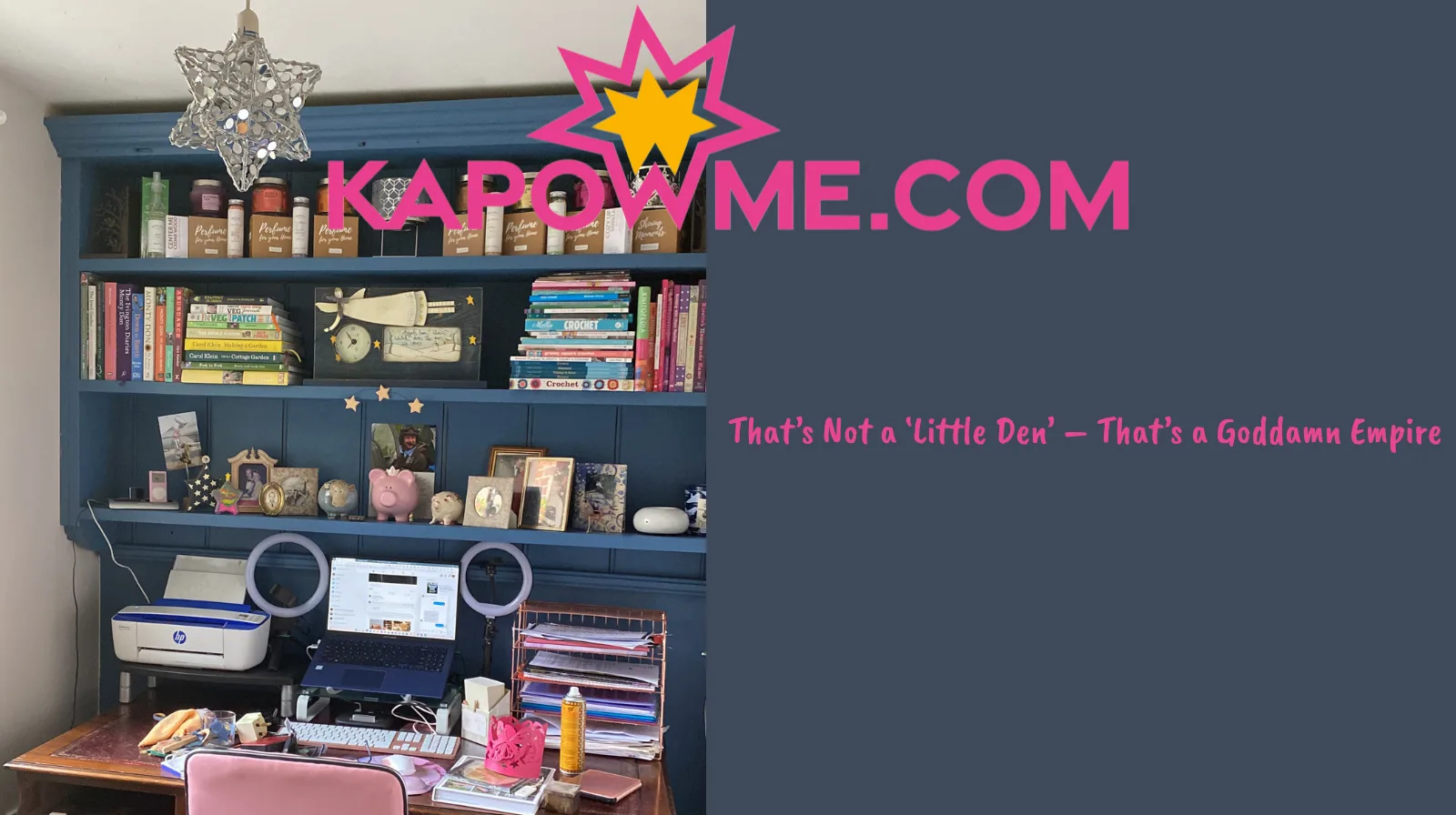
It started with an offhand comment: “What a cute little den you’ve got there…”
It was meant to be friendly, I’m sure. But my stomach did that little twist you get when someone casually undermines what you’ve built.
Because here’s the truth — that “cute little den” is the control centre of my business. It’s where I coach my clients, plan launches, create resources, and build the thing that pays my bills and changes lives.
We have a habit — especially in the early days — of downplaying our own space and work.
“Oh, it’s just the spare room.”
“I work from the kitchen table, so it’s nothing fancy.”
But here’s the reframe: it’s not “just” anything. It’s the base of your operations. It’s where you show up, day after day, to keep your business alive and growing.
Whether your desk is IKEA flat-pack or vintage oak, it’s not about the size or the aesthetics — it’s about the ownership.
Visibility isn’t just about posting online.
It’s about identity — the way you see yourself in your own work.
If you treat your workspace like an afterthought, you’re more likely to treat your business like one too.
When you claim your space (even if it’s a corner of the sofa with a laptop), you claim the seriousness of your work.
Believing in the reality and worth of your business makes you more willing to show up, speak about it, and let other people see it too.
Own Your Empire!
I’ve sat in this space — sometimes energised, sometimes exhausted — and built things I’m proud of.
I’ve worked with clients who’ve launched their own products, grown their income, and found their confidence again.
I’ve weathered quiet months and celebrated big wins.
And every part of that happened here, in my so-called “little den.”
When you stop apologising for your space, you give yourself permission to own your progress and your impact.
You’re not “playing business.” You’re building something real.
And if you want help with creating a plan to help you grow it — I’m ready when you are.
👉 Find out more here.
What does it mean to own your business space?
Owning your business space means treating the place where you work as an intentional operating base, regardless of its size, location, or furniture. It does not require a dedicated office, an expensive renovation, or a picture-perfect backdrop. It means having a reliable place to complete client work, make decisions, manage admin, plan marketing, and protect time for revenue-generating tasks.
A business space can be a desk in a bedroom, a kitchen-table setup, a co-working desk, or a corner of a shared living room. The important part is the signal it sends to you: this is where your business is run. When your work area has a purpose, basic systems, and boundaries, it becomes easier to work with consistency and speak about your business with confidence.
A simple way to make your workspace support your business- Choose one primary work zone. Identify the surface, seat, and storage area you use for focused business tasks.
- Keep essential tools within reach. This may include your laptop, charger, notebook, client files, calendar, and a way to take calls.
- Create a start-of-day cue. Open your task list, review appointments, and decide the most important business outcome for the day.
- End each work session deliberately. Put away confidential papers, note the next action, and reset the area for tomorrow.
- Review the space weekly. Remove clutter, organise paperwork, and check whether the setup still helps you do your best work.
This routine is less about aesthetics than reducing friction. A functional space makes it easier to follow through on the work that keeps a business moving.
Can you take your business seriously if you work from a small or shared space?
Yes. Professionalism is demonstrated through how you serve clients, communicate, deliver work, protect information, and manage your time—not through having a separate office. A small workspace can be effective when it has clear working rules.
- Use visual boundaries: a tray, box, shelf, or laptop stand can define where business materials live.
- Set working hours: tell household members when you need uninterrupted time or privacy for calls.
- Protect client confidentiality: use headphones, lock devices, and store paperwork securely.
- Prepare for video calls: test your camera angle, sound, lighting, and background before meeting clients.
- Pack down with intention: if your workspace must disappear at the end of the day, keep a dedicated place for everything.
A temporary setup can still be a serious business base when it is managed with care.
Own your business space: a practical checklist
You do not need to wait for a larger office, more income, or better furniture before treating your work as real. Start by making your current setup useful for the business you have now.
- Give your workspace a defined business purpose.
- Keep the tools for your core work organised and accessible.
- Use a calendar and task system to plan client work, marketing, and administration.
- Create boundaries around focus time, calls, and confidential information.
- Describe your work without minimising it when others ask what you do.
- Review your setup as your services, clients, and workload grow.
Owning your business space is an ongoing decision. Every time you prepare to work, protect your time, or improve a process, you reinforce the idea that your business is worth supporting.
Your business space can include a digital control centre
A physical workspace works best when it is supported by a clear digital setup. Small business owners can use tools such as Google Calendar or Microsoft Outlook for appointments, Notion, Trello, or Asana for planning, and Google Drive or Dropbox for storing business documents. For client communication, Zoom, Calendly, and Slack can help keep meetings and messages organised.
The goal is not to use every platform. Choose tools that make it easy to find client information, track tasks, schedule work, and store important files. A simple digital system reduces the feeling that your business is scattered across notes, inboxes, and browser tabs. It also reinforces that your work deserves dependable processes.
What does it mean to own your business space?
Owning your business space means treating the place where you work as an intentional operating base, regardless of its size, location, or furniture. It does not require a dedicated office, an expensive renovation, or a picture-perfect backdrop. It means having a reliable place to complete client work, make decisions, manage admin, plan marketing, and protect time for revenue-generating tasks.
A business space can be a desk in a bedroom, a kitchen-table setup, a co-working desk, or a corner of a shared living room. The important part is the signal it sends to you: this is where your business is run. When your work area has a purpose, basic systems, and boundaries, it becomes easier to work with consistency and speak about your business with confidence.
A simple way to make your workspace support your business- Choose one primary work zone. Identify the surface, seat, and storage area you use for focused business tasks.
- Keep essential tools within reach. This may include your laptop, charger, notebook, client files, calendar, and a way to take calls.
- Create a start-of-day cue. Open your task list, review appointments, and decide the most important business outcome for the day.
- End each work session deliberately. Put away confidential papers, note the next action, and reset the area for tomorrow.
- Review the space weekly. Remove clutter, organise paperwork, and check whether the setup still helps you do your best work.
This routine is less about aesthetics than reducing friction. A functional space makes it easier to follow through on the work that keeps a business moving.
Your business space can include a digital control centre
A physical workspace works best when it is supported by a clear digital setup. Small business owners can use tools such as Google Calendar or Microsoft Outlook for appointments, Notion, Trello, or Asana for planning, and Google Drive or Dropbox for storing business documents. For client communication, Zoom, Calendly, and Slack can help keep meetings and messages organised.
The goal is not to use every platform. Choose tools that make it easy to find client information, track tasks, schedule work, and store important files. A simple digital system reduces the feeling that your business is scattered across notes, inboxes, and browser tabs. It also reinforces that your work deserves dependable processes.
Can you take your business seriously if you work from a small or shared space?
Yes. Professionalism is demonstrated through how you serve clients, communicate, deliver work, protect information, and manage your time—not through having a separate office. A small workspace can be effective when it has clear working rules.
- Use visual boundaries: a tray, box, shelf, or laptop stand can define where business materials live.
- Set working hours: tell household members when you need uninterrupted time or privacy for calls.
- Protect client confidentiality: use headphones, lock devices, and store paperwork securely.
- Prepare for video calls: test your camera angle, sound, lighting, and background before meeting clients.
- Pack down with intention: if your workspace must disappear at the end of the day, keep a dedicated place for everything.
A temporary setup can still be a serious business base when it is managed with care.
Own your business space: a practical checklist
You do not need to wait for a larger office, more income, or better furniture before treating your work as real. Start by making your current setup useful for the business you have now.
- Give your workspace a defined business purpose.
- Keep the tools for your core work organised and accessible.
- Use a calendar and task system to plan client work, marketing, and administration.
- Create boundaries around focus time, calls, and confidential information.
- Describe your work without minimising it when others ask what you do.
- Review your setup as your services, clients, and workload grow.
Owning your business space is an ongoing decision. Every time you prepare to work, protect your time, or improve a process, you reinforce the idea that your business is worth supporting.